A photograph of two fading sunflowers, sitting alongside a jigsaw of Van Gogh’s famous painting, got me thinking about something I've often struggled to put into words: the energy we feel when we encounter a work of art. Where does that connection come from, and can it survive in a reproduction? From the science of our emotional responses to the often-overlooked beauty of still life, I've been reflecting on how art captures the fleeting moments of everyday life and gives them something rather wonderful — a chance to live on.
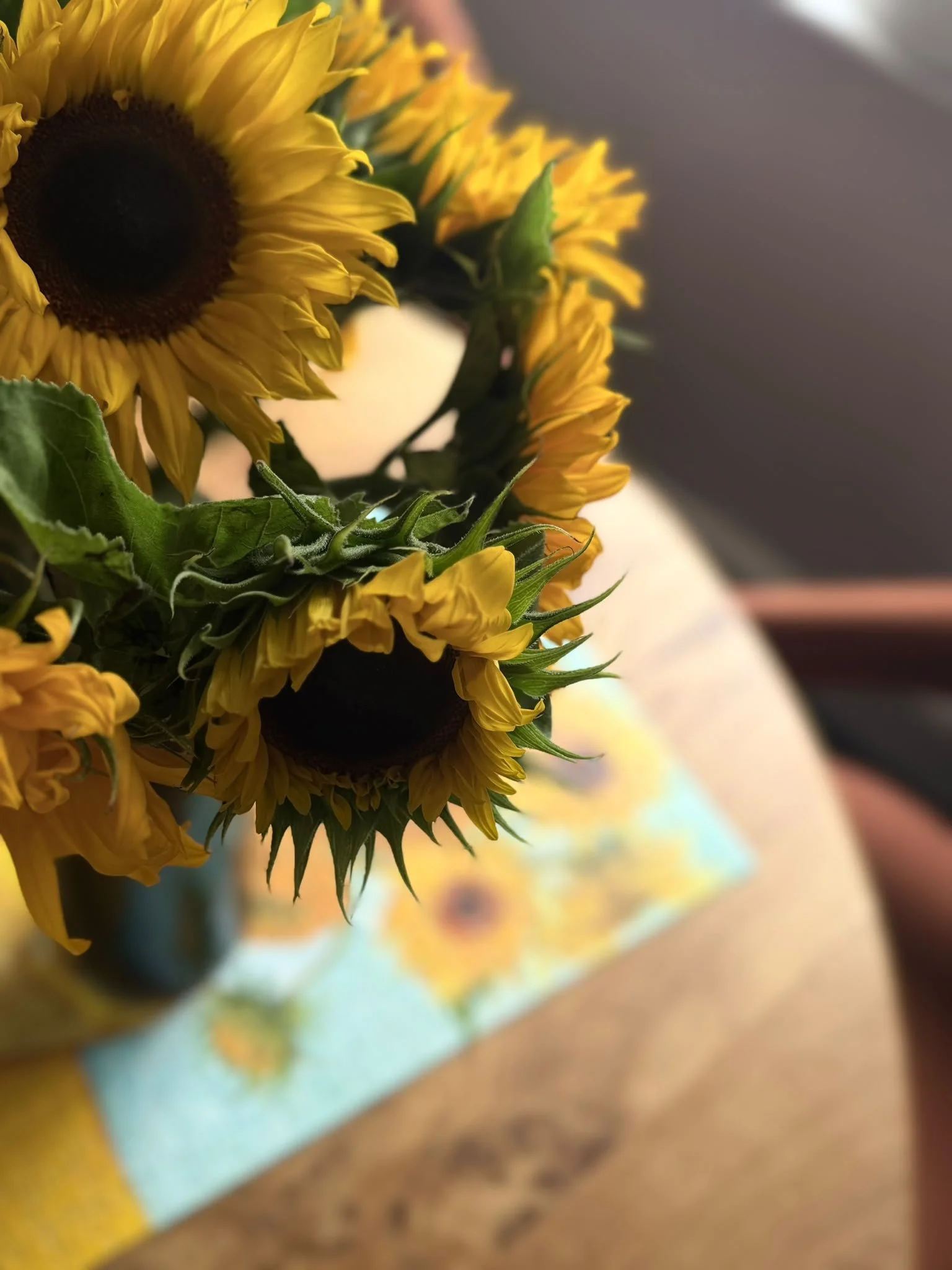
I took a photograph today, not for the gallery, but for my daughter, Olive. Two sunflower compositions; real flowers a little past their best, leaning over a jigsaw of Van Gogh's Sunflowers that she had completed during her last visit some weeks ago. The real flowers and the painted ones, sharing the same patch of light. I sent it without much thought. It was only afterwards, looking at it again, that I started to wonder why I'd reached for my phone at all.
What was I trying to keep hold of? The flowers wouldn't last the week. The jigsaw, painstakingly reassembled piece by piece, was itself only ever a reproduction of a reproduction — a fragmented version of a painting most of us have seen so many times in print that we could probably draw it from memory without ever having stood in front of the real thing. And yet something about the two together, real and painted, felt worth holding onto.
It sent me down a rabbit hole, the kind I often visit. We know now that humans exchange more than words and glances when we're close to one another — pheromones, traces of microbiome, particles shed from skin and breath, passing between us in ways we're only beginning to understand the extent of. I'm not for a moment suggesting a painting does anything of the sort. But it made me wonder about the nature of "energy" in a picture — what it is, where it comes from, and whether it can survive translation: from brush to canvas, canvas to print, print to jigsaw, jigsaw to a photograph taken on a phone for a daughter two hundred miles away. Throughout my gallery career, I’ve spoken of this energy on so many occasions but until now never really looked to quantify it.
As it turns out, there's some good evidence that something does survive, and that something is lost. A 2024 study commissioned by the Mauritshuis museum found that viewing an original painting produced roughly ten times the emotional response of viewing a reproduction of the same work, measured through EEG, eye-tracking, and MRI. The most active region of the brain was the precuneus - tied to self-reflection and our sense of self - suggesting that what we respond to in front of an original isn't only the image, but something closer to ourselves being stirred by it.
Other researchers have found a more complicated picture. A King's College London study found that heart rate and skin conductance showed little difference between originals and reproductions, even while people still rated the originals as more moving. The body's instruments, in other words, don't always agree with what we feel. There's something rather comforting in that gap — it suggests energy in art isn't simply a matter we've fully measured and filed away. There's still room for mystery, even within the data. And way more opportunity for investigation.
Which brings me back to the kitchen table, and the sunflowers, and the half-built jigsaw beneath them.
We have a number of Still Lives in the gallery, and they are, I think, chronically underappreciated as a genre. Dismissed sometimes as decorative, as safe, as the genre you choose when you can't think of anything bolder to paint or buy. But a Still Life is, by definition, an artist's record of what was simply there and provides the most perfect opportunity for the artist to explore and deliver against their voice and credentials. My sunflowers will be in the compost by the weekend. The jigsaw will eventually be dismantled, boxed, and put away. But there's something in a Still Life, that does what my photograph could only hint toward: it keeps the energy of an ordinary moment from disappearing entirely, and holds it translated, ‘published’ and ready to be experienced at the level at which we are comfortable engaging with what is probably one of the least forgiving artistic genres...
One might argue that's the real case for owning one.
works related to this journal.
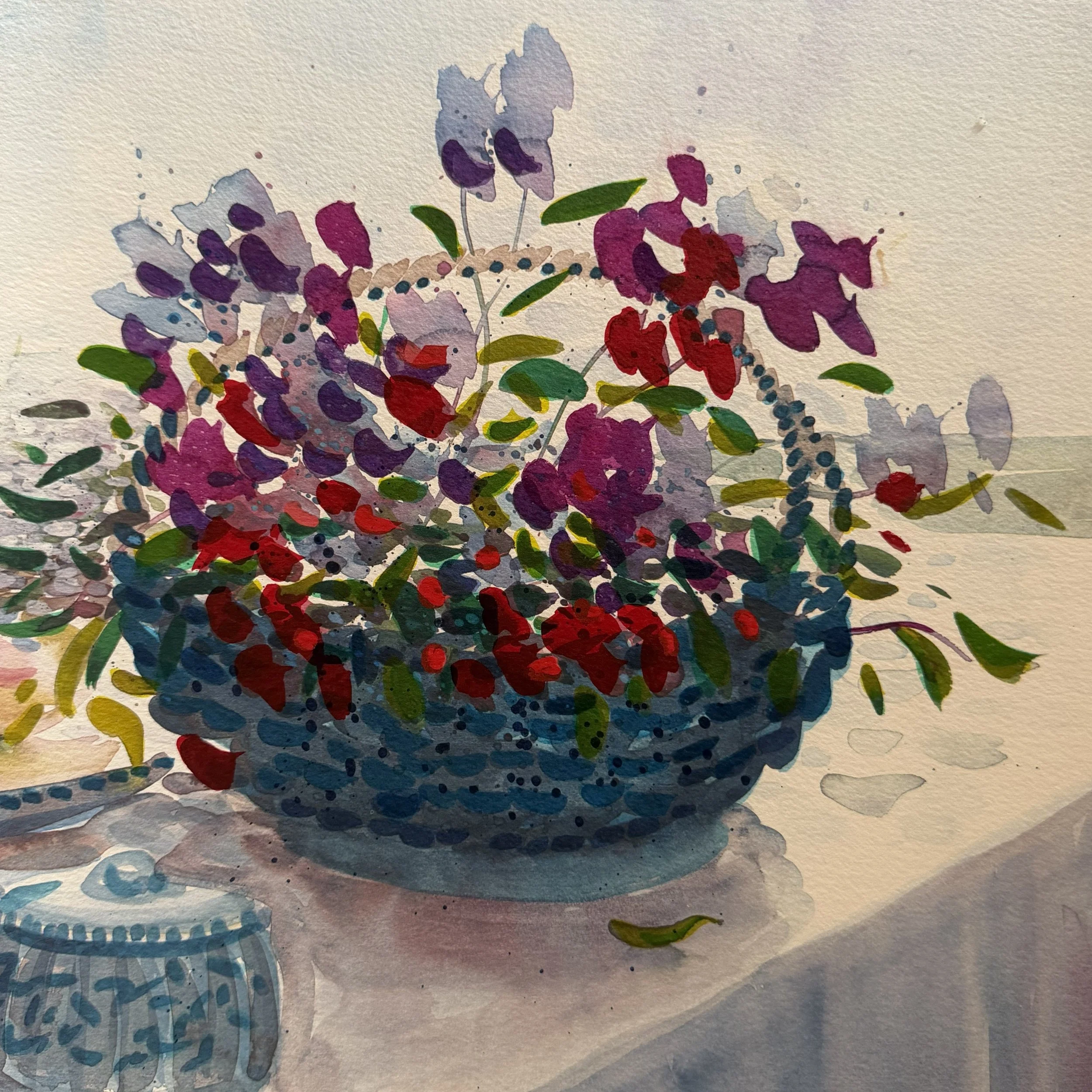
Catalogue
Medium: Lithograph
Edition: Limited (of 275)
Paper Size: 52.5 x 37.5 cm
Image Size: 52.5 x 37.5 cm
Provenance: Futerman
View artist profile: Patrick Livingstone
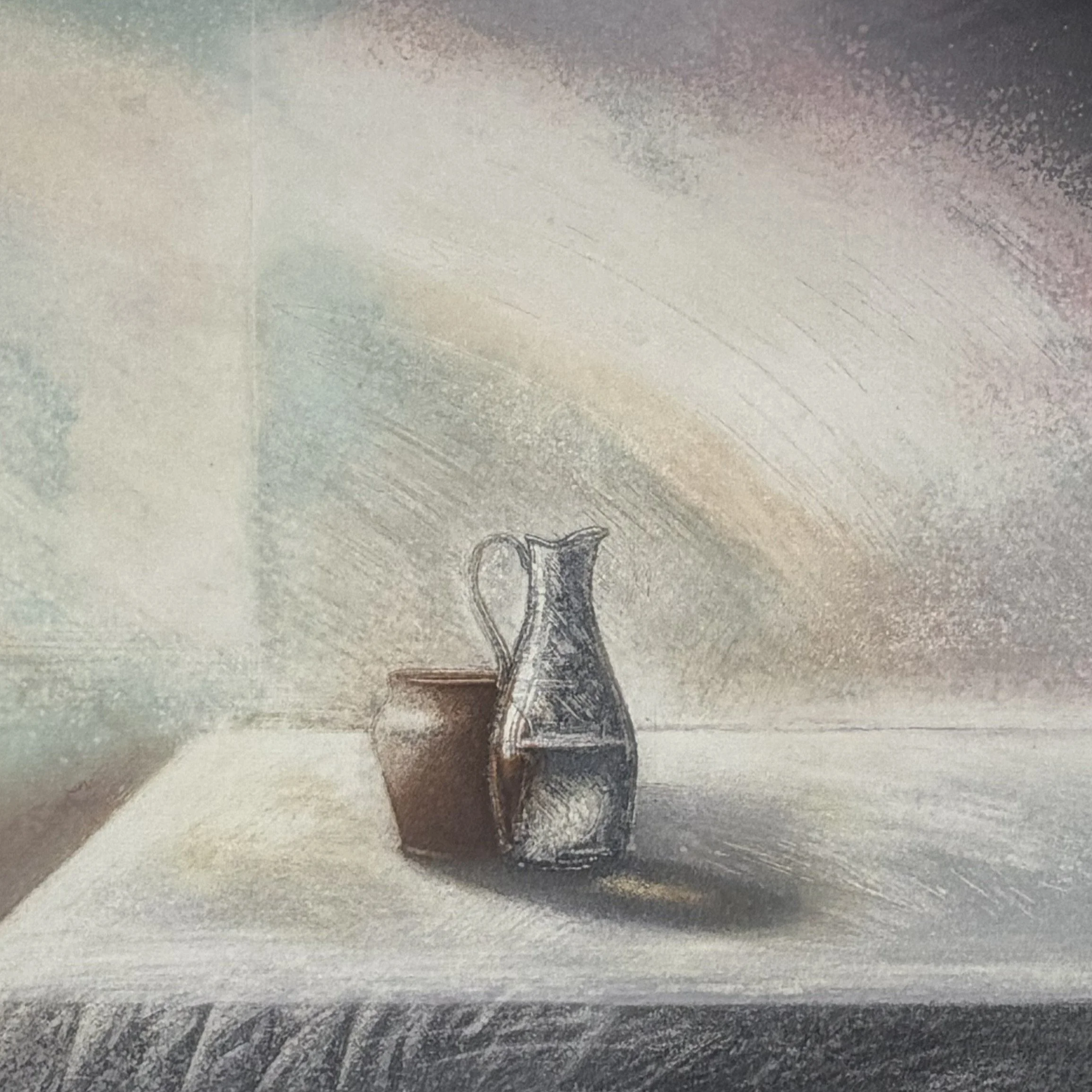
Catalogue
Medium: Etching
Edition: Limited (of 200)
Paper Size: 58 x 60 cm
Image Size: 30 x 38 cm
Provenance: Futerman
View artist profile: Peter Eastham
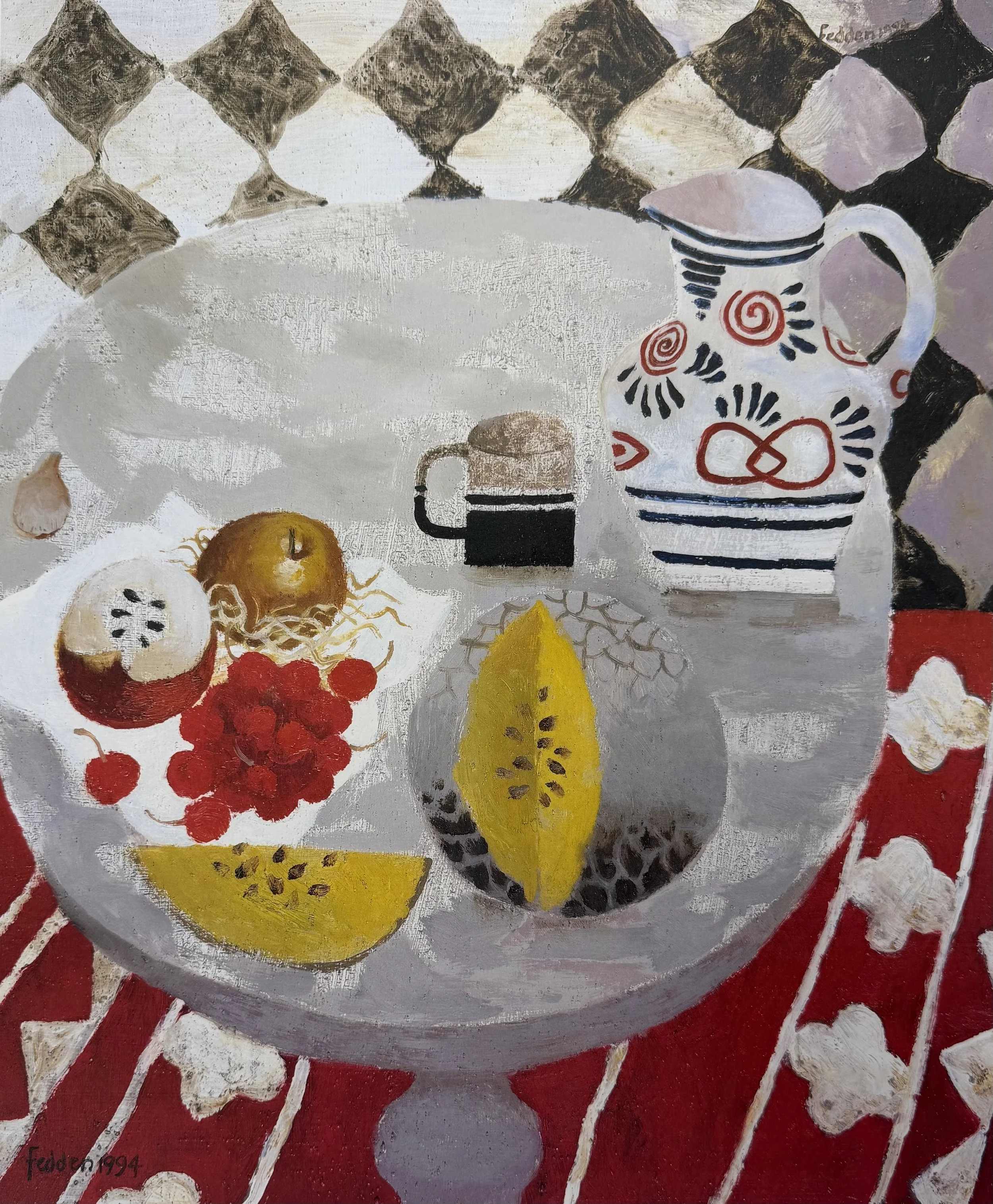
Catalogue
Medium: Lithograph
Edition: Limited (478/550)
Paper Size: 56 x 44.5 cm
Image Size: 41 x 35 cm
Date: 1994
Provenance: Futerman
View artist profile: Mary Fedden OBE RA